.jpg)

ENJOY MARKET!:-) THIS PAGE FOR INTRODUCE KOREA TRADITIONAL MARKET AND KOREA CULTURE
2013년 10월 24일 목요일

2013년 10월 10일 목요일
.jpg)
2013년 10월 6일 일요일
[Talk Talk Market] Bangcheon Market is artistically dressed :-)
[Talk Talk Market]
Bangcheon
Market is artistically dressed :-)

Bangcheon market is very famous for travel
bloggers. Because there are a street of Kim Gwang-seok, a variety of foods which remind
visitors of the bygone days and many ateliers.
Kim Gwang-seok is known as a legend of folk songs
in Korea. The street where named after him was made to remember him because he
grew up in Daebong-dong
which is Bangcheon
market in it. There are cart bars, accessories and murals that describe his
life.

How about following up about special
market where memory and art coexist? His memory is enshrined in the
street. For example, there are a lot of his name in shop names.

Also, it looks so special because of many
different colors. There are lots of ateliers, in which are used for both
restaurant and workshop, so you can see unique shops there.

This is shown for Bangcheon
market. An artist drew this to show the structure of the market.

Bangcheon market is a place where those who
hope to remember the market wanna vitalize. As a place of communication
and recalling of the past, some people hope it to be crowded with lots of
people. We hope, too. And We hope you guys to accompany Bangcheon
market :-)
2013년 9월 26일 목요일
.jpg)
2013년 9월 22일 일요일
[Talk Talk Market] Changpyeong 5-day Market
[Talk Talk Market]
Changpyeong 5-day Market

Changpyeong 5-day Market where tradition is alive!

Do you know the famous movie, ‘The Curious of Benjamin Button’? There is a village in Korea where takes a journey backwards through time. It is Changpyeong, Damnyang where joined International Slowcity.

Changpyeong 5-day Market reflects whole city, Changpyeong. It doesn’t sell industrial products made in factories. Instead of it, the villagers make something good like snacks by hand and put them to market.

Changpyeong is a small and peaceful village, but the market is crowed with lots of people.

It is too difficult to find products made in factories because the village keeps the traditions of the men who have gone before them. The market is full of the products that people have grown and made by hand.


Your mouth might water at the sight of lots of delicious food. There are fermented soybean lump, vegetables pickled in soy sauce and Injeolmi, Korean traditional rice cake made from the glutinous rice and coated with bean flour. They’re fit to live in smaller size and amounts because the village women come out to sell things, carrying them in their hand or on their heads. We can guess that they always do their utmost to entertain our mouth :)

Are you full? But this is not the end. You can enjoy the famous food in this region, Boiled rice served in soup! If you enter the street where the 5-day market is held, you can see the street of Gukbap, boiled rice served in soup.

Welcome to Changpyeong 5-day market, a place of great charm :)
2013년 9월 15일 일요일
.jpg)
2013년 9월 10일 화요일
[Enjoy Food] Budae Fries in Pyeongtaek Central Market
Budae(Military Base) Fries
in Pyeongtaek Central Market

You can see 3 covered wagons in front of the main gate of K-55 Air Base. They are so-called Budae Fries Covered Wagon where you eat all the fries by sprinkling salt on them instead of dipping them in soy sauce.

The fries are made with hot pepper, sweet potato, potato, shrimp, squid, onion, rolled seaweed and dumpling. It is said that the name Budae (Military Base) Fries was made because they are sold in front of the army base, or because they are eaten by sprinkling salt on them to fit the taste of American military personnel. Feel free to have a taste when you tour to Korea.

2013년 9월 9일 월요일
[Enjoy Food] Special Noodles in Jeongseon Market!
ENJOY Special Noodles
in Jeongseon Market
■ Slaping Nose Noodles in Jeongseon Market

It is called ‘KotDeungChiGi (Slaping nose noodles)’ because the noodles may slap your nose when you eat it because of a chewy texture. Originally, its name was ‘NooReun Noodles (Pressed Noodles)’ but it is more commonly known as ‘KotDeungChiGi’.

It is not common foods so you can taste it only in Jeongseon. If you want something cool in Summer, you can eat a cold dish.
■ Tadpole Noodles
Tadpole noodles made from cone is delicacy of summer. The shape of tadpole noodles looks like tadpole.

It is also called ‘tadpole muk’ in Jeongseon, Gangwon-do. Tadpole noodles is good for relieving a hangover. It’s a digestible food that you will want to eat again in 2 or 3 hours. You can remove from heat when you eat it in Summer. It is healthy for those who suffer from adult diseases such as hypertensive and diabetics because it is a low-calorie food.

You can taste ‘real’ Tadpole Noodles if you go to Jeongseon Market until late autumn after the rainy season is over.
[Enjoy Food] Fresh Sea Foods & Dried Sea Foods!
Taste
Busan!
You
must taste it when you come to Dongnae
Market! Enjoy Food!
●
You
can feel delicious sea smell through the food! Fresh sea food!
Sea
cucumber, Sea squirt and Gastropods

Sea
cucumber for eating raw is elastic and smells good. Eating sea cucumber is good
for those who get hot so easily.
Sea squirt is known as sea ginseng. People usually eat sea squirt raw and use it for cook because it is good for detox and antiaging effect.
Sea squirt is known as sea ginseng. People usually eat sea squirt raw and use it for cook because it is good for detox and antiaging effect.
Gastropods clinging to rock struggle to live against big wave. It tastes so chewy and plain that many people like eating it.
● Good
Taste,
Good Health. Dry Fish!

Anchovies
fished
during spawning time are 10~15cm length. It’s mainstream anchovies
which
is fresh and fatty. Also, ‘raw anchovies’ are so tender that many travelers
love to eat
it.
Growing up in optimal conditions, ‘Gijang seaweed’ is famous for its chewy taste and unique flavor.
‘Kelp’
is rich in potassium, so lots
of tourists buy
it for their health.
2013년 9월 8일 일요일
[Talk Talk Market] Pyeongtaek Central Market
Pyeongtaek Central Market

Talk Talk Market!
The place where I’ll introduce you today is a Pyeongteak central market located in gyungkido.

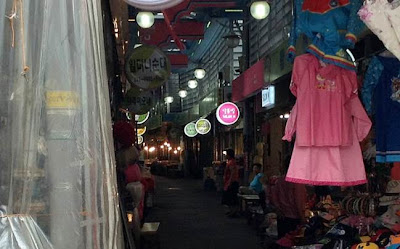
The hobby shops, fashion accessory shops, multi-national restaurants and a multitude of bars and clubs create an impression of a shopping mall in the alley rather than a typical traditional market.


2013년 9월 5일 목요일
[Enjoy KOREA] Arirang Festival
Arirang Festival
-Jeong Seon Arirang
-Intangible Cultural Properties number 1
-Established : 1971
-Location : Jeong Seon - gun

● History Jeong Seon Arirang, also Known as A Ra Ri.
This local folk
song has been handed down for generations. It gained popularity in Eastern
Korea when it first began to be sung 600 years ago. At that time Korea was in a
transitional phase, moving a from the GoRyeo Dynasty to the Joseon Dynasty. Many scholars from the old GoRyeo Dynasty swore their
allegiance to their former King and went into hiding.
At first they hid in Song
Do, then they moved to Jeong Su. While in exile
they ate wild edible plants and kept reminding themselves to love their former
king and remain loyal to him. Naturally they thought about their homes and
families that they had left behind.
So they began to write Chinese poetry, as a
means of expressing their feelings. The scholars knew that their poetry was a
good means to mark other people know and understand their ideas. People sung
the poems and passed them on.
Jeong Seon Arirang was one such poem.
Later, other poems were written about such to pics as the massacre of the scholars, war and other
unfortunate situations in life. During colonization, the Japanese suppressed
all kinds of Korean ideology, but the Korea people were still able to express
themselves though songs.

● Jeong Seon Arirang's Distinguishing
Features
1. The original title of the song was " A Ra Ri ". the lyrics
are very sad
2. The Lyrics and melody are typical of the time period
3. They composed the lyrics from their life, feelings and nuture the lyrics were often long
4. Most of the time the singers would take turns each singing a solo verse in turn then
they would sing the refrain in unison
5. Many songs are from Chinese poetry
6. However the songs weren't exact Chinese poetry readings instead the lyrics were
explained in an easy way
7. Some songs are sexual
8. No record
9. Every town has their own style of Jeong Seon Arirang
2. The Lyrics and melody are typical of the time period
3. They composed the lyrics from their life, feelings and nuture the lyrics were often long
4. Most of the time the singers would take turns each singing a solo verse in turn then
they would sing the refrain in unison
5. Many songs are from Chinese poetry
6. However the songs weren't exact Chinese poetry readings instead the lyrics were
explained in an easy way
7. Some songs are sexual
8. No record
9. Every town has their own style of Jeong Seon Arirang

2013년 9월 4일 수요일
Jungsun’s representive traditional market,
jungsun 5days market.
Talk Talk Market! The place where I’ll introduce you today is a Jungsun 5 days market located in Jungsun, Kangwondo Jung-sun has a beautiful nature sightseeing resource and keep the historical hesitage.

● keep the beautiful nature sights in jungsun 5 days market
1. The Market has the nostalgia and pure environment of an old Korean Market
2. If you go to the market, you'll be able to get a sense of original Korean lifestyle
3. Korea has a very doleful melody called " Jeong Seon Arirang " which originated from this city Jeong Seon. Many people love Jeong Seon because, until the present time, it has retained it's untouched nature
4. Jeong Seon is proud of natural features it has been blessed with East River, Blue JoYang River, Hwa Am cave and the special scenery known in Korea as " Hwa Am 8 Kyoung ( 8 different locations in the Jeong Seon Area ) "

● Blooming Spring - Many vegetables through these mountainous organic sprouts and a special vegetarian dishes call " San Chae ". You can get a real feeling of Spring.

● Hot Summer - Tadpole Soup ( But, it's not made with tadpoles!! Made out of tomato and corn ), Corn, Chicken rice soup with Hwang Gi, Pine Mushroom, Garlic and so on, help you to have a more enjoyable summer. At Jo Yang Beach you can enjoy River Rafting, too. It's strenuous but you'll feel great after words!

● Fresh Fall - Pear, Hwang Gi, Deo - Deck, Sea Snails, Potato, Wild Grapes and Kiwis. People can enjoy these different varieties of fresh fruits after the spring harvest.

● White Winter - Warm Potato Cake, Old Fashioned Steam Bread, Pepper - Pot fresh water fish soup. Millet, Rice Pancakes, Buckwheat Pancakes, and Corn give you a good appetite in cold weather.
2013년 8월 21일 수요일
[Enjoy KOREA] Food Culture of Jeju Island
Food Culture of Jeju Island

As Korea's southernmost island, Jeju Island features a
warm climate. Several unique species of fish are caught offshore there. The
residents of sea villages used to fish and female divers would catch fish
underwater. In mountain villages, mountains were reclaimed for farming and
mushrooms, wild plants and ferns were collected at Hallasan Mountain. Rice
production is scarce. Instead, bean, barley, millet and sweet potatoes are
cultivated in abundance. Tangerines, abalone and breams are the most well-known
specialty products.

The diligence and modesty of Jeju residents are
reflected in their food. They don't prepare food in large quantities.
Seasonings are not used much and the food is relatively salty. Jeju Island has
traditionally been a famous center of abalone harvesting. These can be enjoyed
raw in the form of sashimi. Abalone porridge, which is cooked by stir-frying
rice that has been soaked in water with sesame oil, boiling the rice after
adding water and bluish fresh intestines and adding sliced abalone, is a
delicacy with a unique aroma and a bluish color. Buckwheat powder is made into
a soft dough and pan-fried in paper-thin slices, then made into rolls filled
with white radish slices. This is called bingtteok, a local dish of Jeju Island that is central to rituals and banquets.
2013년 8월 6일 화요일
[FunFun Market] jeonju moraenae market 2
Life of Freshness and Direct
Transactions

The Jeonju Moraenae Market sells vegetables·fruit·meat·fish·dried fish·clothing and other miscellaneous items. Of the produce, the sale of farm-fresh Chinese cabbage and white radish is the most famous. The view at dawn at the Jeonju Moraenae Market is of merchants and their overflowing trucks of Chinese cabbage and white radish and a long line of retail dealers and customers who want to buy these products. Clean produce is harvested and delivered directly from nearby Soyang, Yongjin, and Jinan daily.


Eliminating the middleman, the fresh garden vegetables are sold at more affordable prices than competitive markets. There are also many customers who live in other areas that go out of their way to come to the Jeonju Moraenae Market because the quality of the vegetables is always good. Cows, pigs, chickens, and other livestock products raised in clean areas is another representative product of the Jeonju Moraenae Market.
2013년 7월 30일 화요일
[Enjoy Korea] the Seoksu Art Project (SAP). in seock-su market
Finding Hidden Treasures Everywhere the Path Touches
As a new city appeared, the commercial center of Anyang moved to that area, and the atmosphere of Seoksu Market slowly sunk. However, the market’s atmosphere gradually began to change as ‘Stone and Water’entered the area in 2002.


The lonely stores that had lost their function transformed into a kaleidoscopic space, and the merchants and artists’ efforts became a revitalizing tonic for the market. Artists drew merchants’faces on the walls of the market, made newsletters, and carved door plates to tell the merchants’ stories. There are also works done by both artists and merchants together installed in the alleys of the market. With a sense of fellowship with the merchants, Stone and Water had a successful role in attracting young customers to the market through an art project known as the Seoksu Art Project (SAP). A space that was turned into a gallery naturally attracts citizens, and Seoksu Market is slowly but surely changing toward the center of merchants and artists. With every year,Seoksu Market has developed into a special cultural space. There was even a scene where artists and merchants met; as customers began coming to look at the works of art in the market, the merchants themselves had an art project of their own. This year as well, Seoksu Market is planning to hold various exhibitions centered around Stone and Water,where art and everyday life meet and communicate. A new picture of the evolving market is being drawn on the artists’ large canvas.
As a new city appeared, the commercial center of Anyang moved to that area, and the atmosphere of Seoksu Market slowly sunk. However, the market’s atmosphere gradually began to change as ‘Stone and Water’entered the area in 2002.
The lonely stores that had lost their function transformed into a kaleidoscopic space, and the merchants and artists’ efforts became a revitalizing tonic for the market. Artists drew merchants’faces on the walls of the market, made newsletters, and carved door plates to tell the merchants’ stories. There are also works done by both artists and merchants together installed in the alleys of the market. With a sense of fellowship with the merchants, Stone and Water had a successful role in attracting young customers to the market through an art project known as the Seoksu Art Project (SAP). A space that was turned into a gallery naturally attracts citizens, and Seoksu Market is slowly but surely changing toward the center of merchants and artists. With every year,Seoksu Market has developed into a special cultural space. There was even a scene where artists and merchants met; as customers began coming to look at the works of art in the market, the merchants themselves had an art project of their own. This year as well, Seoksu Market is planning to hold various exhibitions centered around Stone and Water,where art and everyday life meet and communicate. A new picture of the evolving market is being drawn on the artists’ large canvas.
피드 구독하기:
글 (Atom)