레이블이 korea's food인 게시물을 표시합니다. 모든 게시물 표시

2013년 8월 22일 목요일

[Enjoy Market] Boseong Market


Boseong Market


Opened in 1955, Boseong Market was chosen as a "Cultural Tourism Market" in 2009 since it was located near natural tourist attractions such as green tea fields and Mt. Jeamsan. Most of all, it is located in Boseong, the cultural hometown of world famous pansori (Korean traditional vocal and percussional music performance). 


Local agricultural products as well as seafood caught from Deukryang Gulf are traded in the market, such as shallot, potato, kiwi, strawberry, green tea, linen, kkomak (ark shell clam) and nokdon (green tea-fed pork).


Boseong Market has linked local specialty shops with places of interest such as green tea fields, Yulpo beach, Beolgyo (the setting of Korea's one of the greatest novels "Taebaeksanmaek"), Mt. Ilimsan (the habitat of royal azalea), Mt. Jeamsan Recreational Forest, and Daewonsa buddhist temple, etc. Furthermore, the market established concert stages and experiential learning activities to add more flavor.


2013년 8월 8일 목요일

[FunFun Market] jeonju moraenae market


Plentiful Generosity and a Variety of Food


It is fun to choose between the variety of food at the Jeonju Moraenae Market, such as red bean kalguksu, sundae rice soup, whole chicken, Chinese pancakes, and sticky rice donuts. One of the original sundae rice soup restaurants at the Jeonju Moraenae Market is ‘Pi Sundae,’ which is highly known for its unchanging traditional taste for the past 23 years.
 
 
The Gochang Chicken Restaurant, also known as ‘Shijang Tong Dalk’ (Market Whole Chicken), is located inside one of the market’s alleys. This restaurant reminds customers of past memories and stimulates their.


2013년 8월 4일 일요일

[TalkTalk Market] Moraenae market


Of all the places named Moraenae in the country, a stream in JeonjuCity’s Inhu-dong in North JeollaProvince points to JeonjuCity’s Moraenae.
As a tributary of JeonjuStream starting in Girinbong, it passes through Inhu-dong and Nosong-dong and meets the JeonjuStream in Jinbuk-dong.


Moraenae gets its name from the heavy build up of sediment and morae, or sand, of the meandering stream. Most of the stream has been paved over into roads, and the surrounding area is commonly called Moraenae.


This is exactly where the Jeonju Moraenae Market is located. The Jeonju Moraenae Market was established in 1974. At the time, a small group of traders met and started commercial activity, and the market began with people mostly selling produce from street stalls. Currently it is recognized as a medium-sized market with over 300 stores. Including the merchants who operate street stalls, it is home to about 500 people.

2013년 6월 27일 목요일

[Enjoy KOREA] the Kim Yu-jeong House of Literature


Counted among Korea’s leading short story novelist, Kim Yu-jeong (1908~1937) was born in Sille Village in Sindong-myeong, Chuncheon. A restoration of his birth house, the Kim Yu-jeong House of Literature is part of an effort to turn the whole village into a literature village commemorating the novelist. The house has an exhibition hall, a walking path, and a hiking trail.


Introduction 
Kim Yu-jeong spent a great deal of his life in Seoul and returned to his hometown in 1931 at the age of 23. He published his first novel Sangol Nageune (The Wanderer) followed by numerous rural-based novels such as Dongbaekkkot (The Camellias) and Bom bom (Spring).
Inside the exhibition hall, his birth home and even a treadmill are reproduced in their original form. A variety of programs reproducing his works have also been organized. 


Closed
Closed on every Monday and the day after National holidays
 
Operating Hours
 Winter Season 09:30-17:00
Summer Season 09:00-18:00
Admission Fees - Free 
 
Directions 
Take a train from Sangbong Station (Subway Line 7, Jungang Line) to Chuncheon.
Get off at Kim Yu-jeong station.
It is located 3min from the station.
From Namchuncheon station, take bus 1 or 67.

2013년 6월 25일 화요일

[Enjoy Food]Chuncheon Dakgalbi and Makguksu (춘천 닭갈비와 막국수), Gangwon Province

Which gochujang-covered chunk is chicken? And which is cabbage? Doesn't matter, it's all dakgalbi now.


Chuncheon, Gangwon-do is known for two things: dakgalbi and makguksu.
Dakgalbi started out as a dish of grilled chicken bits in an area where chicken was cheap.
Today, dakgalbi is seasoned and deboned chicken stir-fried with sliced tteok, sweet potato, perilla leaves and cabbage.
Makguksu is buckwheat noodles in a chilled kimchi stock, often with additional flavors in the form of sugar, mustard, sesame oil or vinegar. The noodles are topped with whatever vegetables strike the chef's fancy.


These perfectly matched dishes form the yin and yang of a frugal and filling meal.
We say frugal because noodles were traditionally the sustenance of the poor, and because dakgalbi was historically the favorite of the poor -- at a mere ₩100 per serving in the 1970s, it was popular with soldiers and students, thus gaining the nickname "commoner's galbi" or "university student's galbi."
Dakgalbi is a recent invention, created in the 1960s. It's spicy, sweet and meaty, served hot on the same table it's cooked on.
Makguksu, on the other hand, has been around since the Koryeo Dynasty. It's spicy, savory and wheaty, served chilled.


The harmonious taste of these two dishes together is for the diner to decide, but meanwhile, the twenty-odd dakgalbi restaurants in Chuncheon's "Dakgalbi Alley" will continue to serve them together.


Article from – cnn travel ‘Food map: Eat your way around Korea’ violet kim

2013년 6월 20일 목요일

[Enjoy Food] Jang uh gui(eel broiled)


Jang uh gui is a great Korean seafood dish using fresh water eel as the main ingredient. This dish can be prepared in various ways in which can be broiled and/or grilled to achieve its distinctive tastes & flavors. Some may choose to do both, first broiling the eel then grilling it to achieve the ultimate perfection in texture and color. To prepare the dish, bones are removed from the eel then marinated with a sweet and tangy sauce which includes rice wine, gochugaru (red chili pepper flakes), sesame oil, soy sauce garlic, sugar and ginger. 


When cooking, additional sauce may be consistently brushed onto the fish to add extra flavors & aroma.This meal is rich in protein, calcium, vitamin A and E and enjoyed especially during the hot summers to avoid heat exhaustion. It is also believed to be good for stamina. Fact: Eel have high content in protein and fat so it can take a long time to fully digest this fish


[TalkTalk Market] Shintanjin Open Market


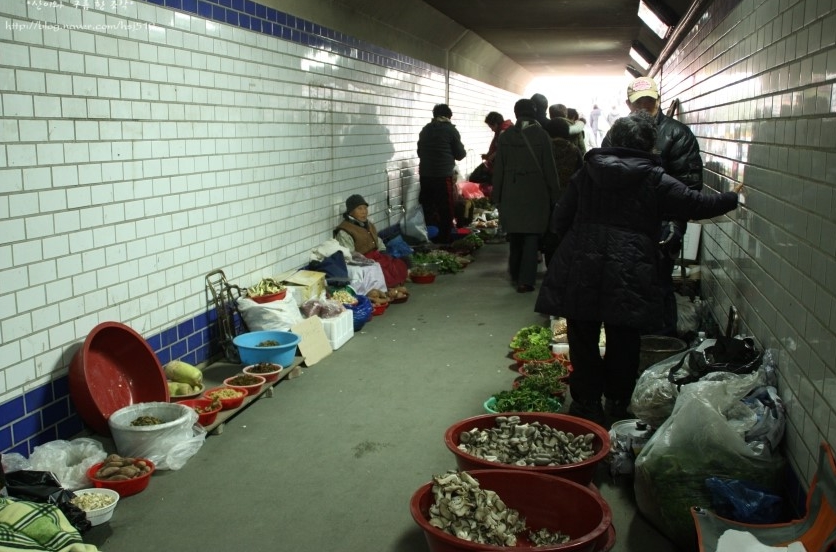
The Shintanjin Open Market is a traditional market that was formed a long time ago. It is held every five days (3rd and 8th) providing a variety of food and attractions. 


The venue ranges from Shintanjin 4 crossroad, underpass, and Seokbongdong Office. The market held on the fifth day is held on Shintanjin open space, spreading out along the left side of the sidewalk, 4 crossroad and on the left of the underpass. On the market date merchants from neighboring areas (Jochiwan, Gongju and Yuseong) come to Shintanjin. Professional peddlers bring clothing, dried fish, and other living accessories, and farmers from the vicinity sell agricultural products they themselves grow


2013년 6월 13일 목요일

[Enjoy Food] SINPO market famous food 5-colored mandu(dumpling)


SINPO market famous food 
5-colored mandu(dumpling)


When it comes to mandu, Sinpo Market is the perfect place. Your pre-conceived idea that mandu tastes pretty much the same everywhere is dead wrong in Sinpo Market. All kinds of Korean mandu are there and each restaurant offers unique types of mandu. It is told that all mandu products in the country are simply products from modifying on Sinpo's.


red bean mandu and vegitable mandu


Most people want hot dishes like mandu particularly on a windy day. Glancing at mandu just taken out of hot pot through smoky steam will make your mouth water.

Among various types of Sinpo mandu, kimchi mandu is frequently recommended. The filling ingredients are mainly a combination of finely chopped Kimchi and grinded meat. The well-fermented Kimchi gives sourish flavor to this mandu, which spices up the taste.


5-colored mandu
(white, red, yellow, green, brown)


Beautiful 5-color mandu is made by dyeing with natural colors, so it is harmless to human health. Because there are five different colored mandus, kids enjoy the privilege of having choices.


Tip.
The filling inside
mandu is salted enough that you do not need to dip it in the soy sauce. Yet, if you are worried about fat content, dipping mandu in soysauce with vinegar is recommended since it lowers caloric intake. Also, mandu dipped in soy sauce with red pepper will give you the taste of bliss when you tour to Korea.


the taste and style of life,
the depth of a traditional market
agency for traditional administration.