레이블이 tour to Korea. Kimchi인 게시물을 표시합니다. 모든 게시물 표시

2013년 11월 3일 일요일

[Talk Talk Market] Jangheung Jeongnamjin Saturday Market


[Talk Talk Market]  
Jangheung Jeongnamjin Saturday Market


 Have you ever heard about Jangheung? It is a little strange place for both foreigner and some Koreans located in Jeollanam-do, KOREA. It is a place in the cleanest environments because Korea government has propelled national land development except Jangheung. So, environment and people in it are too clean and pure. This is why we called it ‘saved land’.


Jangheung Market is also keeping pure and traditional things like Jangheung. Do you know ‘Daemul’, a famous Korean drama which was the first drama to deal with a female president along with politics and government power around her? It was in Jangheung Market that Kwon sang woo’s father ran the Gukbap restaurant in the drama.


Although it is not that big, it is crowded with lots of people in the market day. It became famous through word of mouth and many tourists visited here. So, the county decided to throw a market on Saturdays to encourage urbanities to visit the market. It is the first weekend market in Korea.


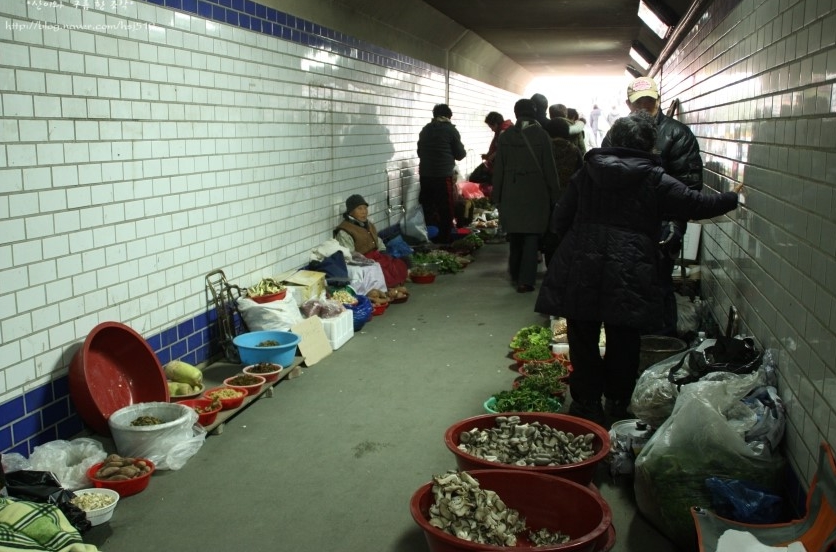
The most interesting thing in this market is that you can see grandmas who pin a name tags such as ‘Yunhwa’ and ‘Jeongja’. They are authorized vendors who sell handmade foods and greens. The county and granmas have confidence in this system and we can buy products with trust.


Do you wonder the charm of saved land, Jangheung? 


Welcome to Jangheung Market!


2013년 9월 22일 일요일

[Talk Talk Market] Changpyeong 5-day Market


[Talk Talk Market] 
Changpyeong 5-day Market


 Changpyeong 5-day Market where tradition is alive!


  Do you know the famous movie, ‘The Curious of Benjamin Button’? There is a village in Korea where takes a journey backwards through time. It is Changpyeong, Damnyang where joined International Slowcity.


  Changpyeong 5-day Market reflects whole city, Changpyeong. It doesn’t sell industrial products made in factories. Instead of it, the villagers make something good like snacks by hand and put them to market.


  Changpyeong is a small and peaceful village, but the market is crowed with lots of people.


  It is too difficult to find products made in factories because the village keeps the traditions of the men who have gone before them. The market is full of the products that people have grown and made by hand.


  Your mouth might water at the sight of lots of delicious food. There are fermented soybean lump, vegetables pickled in soy sauce and Injeolmi, Korean traditional rice cake made from the glutinous rice and coated with bean flour. They’re fit to live in smaller size and amounts because the village women come out to sell things, carrying them in their hand or on their heads. We can guess that they always do their utmost to entertain our mouth :)


  Are you full? But this is not the end. You can enjoy the famous food in this region, Boiled rice served in soup! If you enter the street where the 5-day market is held, you can see the street of Gukbap, boiled rice served in soup.


Welcome to Changpyeong 5-day market, a place of great charm :)


2013년 9월 4일 수요일


Jungsun’s representive traditional market,
 jungsun 5days market.


  Talk Talk Market! The place where I’ll introduce you today is Jungsun 5 days market located in JungsunKangwondo  Jung-sun has a beautiful nature sightseeing resource and keep the historical hesitage


● keep the beautiful nature sights in jungsun 5 days market


Features
1. The Market has the nostalgia and pure environment of an old Korean Market
2. If you go to the market, you'll be able to get a sense of original Korean lifestyle
3. Korea has a very doleful melody called " 
Jeong Seon Arirang " which originated from this city Jeong Seon. Many people love Jeong Seon because, until the present time, it has retained it's untouched nature
4. 
Jeong Seon is proud of natural features it has been blessed with East River, Blue JoYang River, Hwa Am cave and the special scenery known in Korea as " Hwa Am 8 Kyoung ( 8 different locations in the Jeong Seon Area ) "


 Blooming Spring - Many vegetables through these mountainous organic sprouts and a special vegetarian dishes call " San Chae ". You can get a real feeling of Spring.


 Hot Summer - Tadpole Soup ( But, it's not made with tadpoles!! Made out of tomato and corn ), Corn, Chicken rice soup with Hwang Gi, Pine Mushroom, Garlic and so on, help you to have a more enjoyable summer. At Jo Yang Beach you can enjoy River Rafting, too. It's strenuous but you'll feel great after words!


 Fresh Fall - Pear, Hwang GiDeo - Deck, Sea Snails, Potato, Wild Grapes and Kiwis. People can enjoy these different varieties of fresh fruits after the spring harvest.


● White Winter - Warm Potato Cake, Old Fashioned Steam Bread, Pepper - Pot fresh water fish soup. Millet, Rice Pancakes, Buckwheat Pancakes, and Corn give you a good appetite in cold weather.

2013년 8월 19일 월요일

[Talk Talk Market) Maeil Olle Market in Seogwipo


Maeil Olle Market in Seogwipo


At the heart of the walking trend in Korea is the Jeju Olle path. The Olle path-walking craze has improved business for a traditional market in Jeju and even resulted in its changing the name.


Initially held every five days from 1965, the market turned into a regular market named Seogwipo Maeil Olle Market. The emergence of large-scale marts and modernized distribution chains had taken away customers, but the popularity of Olle path and the arrival of those wanting to walk on this natural road revitalized the market.


Located in the downtown of Seogwipo in Jeju, the market is located on the route of the 6th Jeju Olle course (Soesokkak- Oedolgae). A leisurely walk inside the market offers an Olle experience among people’s daily lives.


To promote an ‘Olle culture,’ the market strictly complies with its business principles of marking the source of production and prohibiting cars after noon. These principles were set to guarantee honesty in transactions and to create an atmosphere where people can walk in the market at ease. A stream runs through the market, one meter wide and 100 meters long. It is the first such ecological space established in a traditional market in Korea.  


Major shopping items


Omaegitteok (A chewy rice cake dough colored in green using mugwort, filled with a red bean paste, and then covered with pounded red bean), mandarin oranges, fresh seafood (hairtail, tile fish, eel, hagfish)

Nearby attractions
Lee Joong Seop Gallery, Cheonjiyeon Falls, Oedolgae Rock, Soesokkak Estuary

Related Columns
Jeju Olle

Transportation
Take limousine bus #600 from Jeju International Airport → Get off at Seogwipo New Gyeongnam Hotel (서귀포 뉴경남호텔) bus stop (travel time: 1 hr 20 min) and walk 10 min.

2013년 8월 4일 일요일

[TalkTalk Market] Moraenae market


Of all the places named Moraenae in the country, a stream in JeonjuCity’s Inhu-dong in North JeollaProvince points to JeonjuCity’s Moraenae.
As a tributary of JeonjuStream starting in Girinbong, it passes through Inhu-dong and Nosong-dong and meets the JeonjuStream in Jinbuk-dong.


Moraenae gets its name from the heavy build up of sediment and morae, or sand, of the meandering stream. Most of the stream has been paved over into roads, and the surrounding area is commonly called Moraenae.


This is exactly where the Jeonju Moraenae Market is located. The Jeonju Moraenae Market was established in 1974. At the time, a small group of traders met and started commercial activity, and the market began with people mostly selling produce from street stalls. Currently it is recognized as a medium-sized market with over 300 stores. Including the merchants who operate street stalls, it is home to about 500 people.

2013년 6월 20일 목요일

[TalkTalk Market] Shintanjin Open Market


The Shintanjin Open Market is a traditional market that was formed a long time ago. It is held every five days (3rd and 8th) providing a variety of food and attractions. 


The venue ranges from Shintanjin 4 crossroad, underpass, and Seokbongdong Office. The market held on the fifth day is held on Shintanjin open space, spreading out along the left side of the sidewalk, 4 crossroad and on the left of the underpass. On the market date merchants from neighboring areas (Jochiwan, Gongju and Yuseong) come to Shintanjin. Professional peddlers bring clothing, dried fish, and other living accessories, and farmers from the vicinity sell agricultural products they themselves grow


2013년 6월 13일 목요일

[Enjoy Food] SINPO market famous food 5-colored mandu(dumpling)


SINPO market famous food 
5-colored mandu(dumpling)


When it comes to mandu, Sinpo Market is the perfect place. Your pre-conceived idea that mandu tastes pretty much the same everywhere is dead wrong in Sinpo Market. All kinds of Korean mandu are there and each restaurant offers unique types of mandu. It is told that all mandu products in the country are simply products from modifying on Sinpo's.


red bean mandu and vegitable mandu


Most people want hot dishes like mandu particularly on a windy day. Glancing at mandu just taken out of hot pot through smoky steam will make your mouth water.

Among various types of Sinpo mandu, kimchi mandu is frequently recommended. The filling ingredients are mainly a combination of finely chopped Kimchi and grinded meat. The well-fermented Kimchi gives sourish flavor to this mandu, which spices up the taste.


5-colored mandu
(white, red, yellow, green, brown)


Beautiful 5-color mandu is made by dyeing with natural colors, so it is harmless to human health. Because there are five different colored mandus, kids enjoy the privilege of having choices.


Tip.
The filling inside
mandu is salted enough that you do not need to dip it in the soy sauce. Yet, if you are worried about fat content, dipping mandu in soysauce with vinegar is recommended since it lowers caloric intake. Also, mandu dipped in soy sauce with red pepper will give you the taste of bliss when you tour to Korea.


the taste and style of life,
the depth of a traditional market
agency for traditional administration.