레이블이 unique인 게시물을 표시합니다. 모든 게시물 표시

2013년 8월 21일 수요일

[Enjoy KOREA] Food Culture of Jeju Island


Food Culture of Jeju Island


As Korea's southernmost island, Jeju Island features a warm climate. Several unique species of fish are caught offshore there. The residents of sea villages used to fish and female divers would catch fish underwater. In mountain villages, mountains were reclaimed for farming and mushrooms, wild plants and ferns were collected at Hallasan Mountain. Rice production is scarce. Instead, bean, barley, millet and sweet potatoes are cultivated in abundance. Tangerines, abalone and breams are the most well-known specialty products.


The diligence and modesty of Jeju residents are reflected in their food. They don't prepare food in large quantities. Seasonings are not used much and the food is relatively salty. Jeju Island has traditionally been a famous center of abalone harvesting. These can be enjoyed raw in the form of sashimi. Abalone porridge, which is cooked by stir-frying rice that has been soaked in water with sesame oil, boiling the rice after adding water and bluish fresh intestines and adding sliced abalone, is a delicacy with a unique aroma and a bluish color. Buckwheat powder is made into a soft dough and pan-fried in paper-thin slices, then made into rolls filled with white radish slices. This is called bingtteok, a local dish of Jeju Island that is central to rituals and banquets. 

2013년 6월 23일 일요일

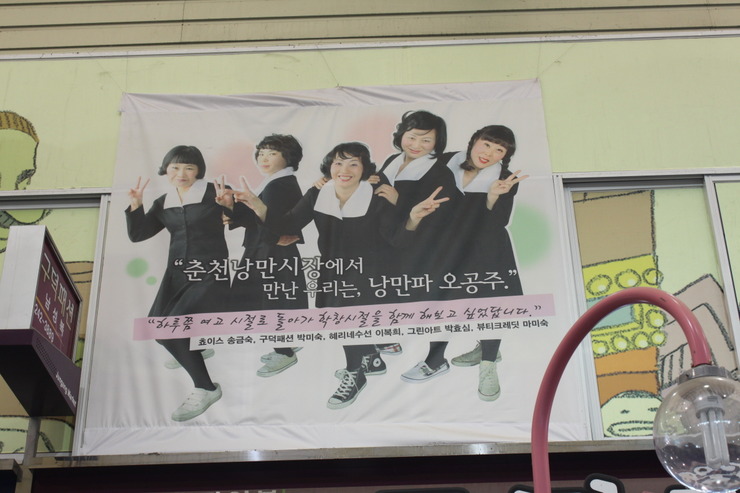
[Talk Talk Market] Nangman Market in Chuncheon


Nangman Market is the new name given to Chuncheon’s first traditional market. Originally called Jungang Market, the market was formed about 60 years ago in the heart of the city following the Korean War. Initially, the market sold manufactured goods from Seoul, American products from the nearby U.S. Army, and local agricultural produce. Gradually, it turned into a large-scale retail market. After experiencing ups and downs caused by the emergence of large-scale marts in the 1990s, Jungang Market’s name was changed into Nangman Market in 2010 to live up to its designation as a culture and tourism market.


Literally meaning ‘a river beckoning spring,’ Chuncheon is referenced in many Korean novels and pop songs as a place of romance and memories. The railway has carried countless travelers to the city for generations. The recent opening of the subway on a double track has shortened travel time to about an hour. The Nangman Market is a nice place to bring back old memories, where people can buy quality products at good prices and enjoy the unique hospitality of a traditional market.


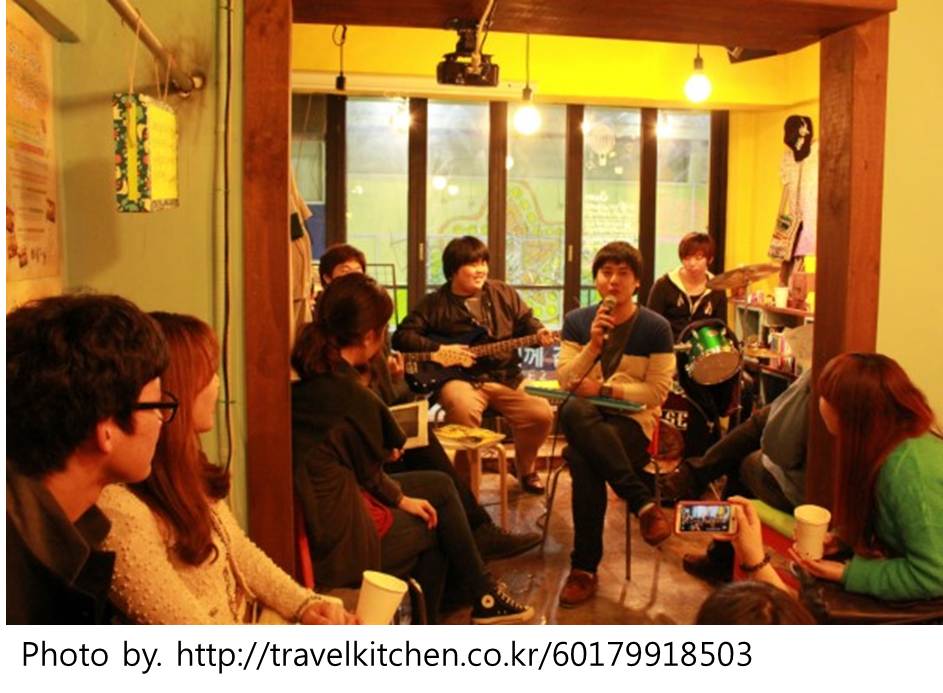
The market is gradually turning into a lively space of culture and art, thanks to its advantageous location in the heart of the city and the enthusiasm of its vendors, cultural activists, and artists. Visitors can enjoy various paintings and formative arts, and have a unique experience in which the whole market turns into a venue for performances. Nearby attractions include Jungnim-dong Church, a modern landmark that’s been in its present location since 1928, Yaksari Pass, which used to be the only road connecting the downtown area with the marketplace, and the old alley where the famed Korean artist Park Soo-keun (1914-1965) spent his youth.
Major shopping items


Food (dakgalbi, toppokki, sundae soup, noodles, etc), clothes, hanbok, bedding)
Nearby attractions : Jungnimdong Catholic Church, Yaksari Pass, Festival Theater Momzit, Artist Park Soo Keun Street
Transportation
Sangbong Station (Subway Line 7, Jungang Line, Gyeongchun Line) -> Namchuncheon Station (Gyeongchun Line)

Take bus #8 or #9 from Namchuncheon Station (travel time: about 10 – 15 min)