2013년 7월 25일 목요일

[Enjoy Food] Goryeo ginseng


While six or seven types of ginseng are known worldwide, the most common types are the Asian Ginseng (PanaxGinseng) grown in Korea and North-East Asia, the American Ginseng (Panax quinquefolium L.) grown in the U.S. and Canada, and the Siberian Ginseng (Eleutherococcus senticosis) grown in China. The Asian ginseng root, whose shape resembles the human body, is categorized as a different species from the American or Siberian types. To distinguish it from other ginseng grown in the world, all of the ginseng cultivated in Korea is referred to as Goryeo ginseng.


Goryeo ginseng is a perennial, shade loving plant, and as mentioned, the root forms “legs” and a “trunk” like a human body. A cultivated ginseng plant can take from four to six years to grow, from selecting the seeds to harvesting, and the more attention given to cultivation, the greater its medicinal effect. Korea has the optimal conditions for ginseng, whose cultivation requires the right natural environment. It is particularly sensitive to climate, to the amount of sunlight, and to soil. Considered a cure for various illnesses even in modern times, Goryeo ginseng has more effectiveness than any other type of ginseng and is effective towards prevention and treatment of most diseases. Because of this, Goryeo ginseng is more expensive than other kinds of ginseng. Sometimes ginseng produced in other countries is remade into Goryeo ginseng.

2013년 7월 23일 화요일

[Fun Fun Market] City tour bus in seoul (traditional market course)


This course departs from Doota and will have a total of 14 stops including traditional markets such as Dongdaemun Market, Namdaemun Market, Gwangjang Market, and Yangnyeong Market and popular areas such as Insadong, and Myeongdong. As buses stop at each destination every 35 minutes, tourists are able to exit the bus at any stop to look around the market and are free to get on the next bus. Audio guides are provided in five languages (Korean, English, Japanese, Chinese, and French).

Ticket prices for the course are 12,000won for adults and 8,000won for teenagers and children.

With the new course added, Seoul City Tour now operates 5 different courses including the City Circulation Course, Night courses I & II, and
Cheongye/Palace Course.


2013년 7월 21일 일요일

[TalkTalk Market] Gyeongdong Market


Gyeongdong Market


GyeongdongMarket started when, after the Korean War, agricultural food vendors from the Northern GyeonnggiProvince and the GangwonProvince gathered in the area to sell their wares. In the 1960s, the market grew rapidly following the completion of a road connecting GangwonProvince with the Seoul area. Medical herbs from GangwonProvince were transported to the market in an ever-increasing number and the market became to specialize in these types of medicinal herbs.


The market sits across several blocks of Jegi-dong and Yongdu-dong in the Dongdaemun-gu district, but it is largely comprised of the Seoul Yangnyeongsi Market, a market selling ginseng, honey, cereals, and medicinal products. The Yangnyeongsi Market is responsible for about 70 percent of the nation’s total distribution of medicinal goods. In addition to other medicinal herbs, visitors can buy things like ginseng, bonnet bellflower, and balloonflower as well as tea ingredients like the fruits of schizandra and cornus, and Solomon's seal (tea ingredients that are hard to find in other parts of the city).

2013년 7월 17일 수요일

[FunFun Marker] Dongdaemun market nearby attraction


Nearby Attractions

Formerly known as “Heunginjimun,” Dongdaemun Gate used to be one of the four main gates leading into the capital city, Seoul, and has long since been the symbol of the Dongdaemun area. The Seoul Folk Flea Market in Sinseol-dong (near Dongdaemun) is a large flea market selling daily use items, folk crafts, local produce, and traditional snacks. It’s a popular tourist destination for visitors wanting to experience the traditional Korean marketplace atmosphere.


Heunginjimun
photo from korea tourism organization


Activities

Right next to the Dongdaemun Market is Cheonggyecheon Stream. Unexpected natural beauty in the heart of the city, the pathway that runs along the stream gives citizens a great place to take a walk or just relax. The stream is adorned with colorful stops such as the Fashion Plaza, the Wall of Culture (murals), light shows, and fountains. There is even a stage that hosts a number of events throughout the seasons. In recent years, Cheonggyecheon Stream has become one of the most beloved places in Seoul.
 
photo from korea tourism organization
 

2013년 7월 14일 일요일

[TalkTalk Market] Gangnam style? No! Dongdaemun style !


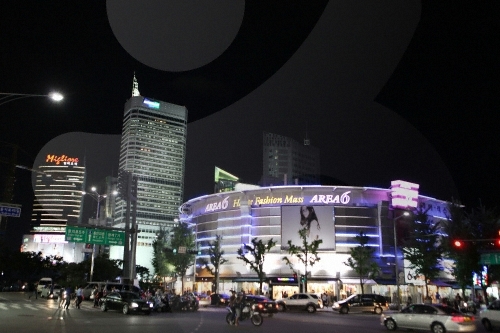
Dongdaemun has every fashion item imaginable: fabric, clothes, accessories, and wedding goods. The newest fashion trends, along with the newest fabrics, often make their debut in the market. It is home to the largest clothing suppliers in Korea, and aspiring designers also come to here to hone and test their skills. Cheap and diverse clothes attract not just fashion leaders but also the average consumer. It has become a place frequented by major Korean and international buyers as well.


Dongdaemun Market started as a traditional market in 1905 and experienced its first major transformation in 1970s as it began to develop as a center of the textile industry (both wholesale and retail), further contributing to the fast economic growth of Korea at that time. With the later construction of mega shopping buildings in the area, the market became reborn as the most famous fashion street in Korea.

Wholesalers across the country visit the market at night, forming an iconic night image in Seoul. The market is a mixture of both traditional and modern stores. Some stores maintain their old buildings, selling clothing materials, crafting clothes, or processing them. Modern shopping malls (such as
Cerestar, Migliore, Designer’s Club, and Doosan Tower) popped up in the late 1990s, attracting young people by holding frequent music and dance performances at night. Various fashion shows and festivities are also held year-round.


Even though stores may sell goods wholesale, individual consumers and tourists purchase them at retail prices. The market offers special fabrics not found anywhere else and sells material and accessories at very reasonable prices. Simple accessories can even be made on-site at some stores. Plenty of currency exchange services and information desks provide a pleasant shopping experience for international visitors.

[article from korea tiurism organizationa]